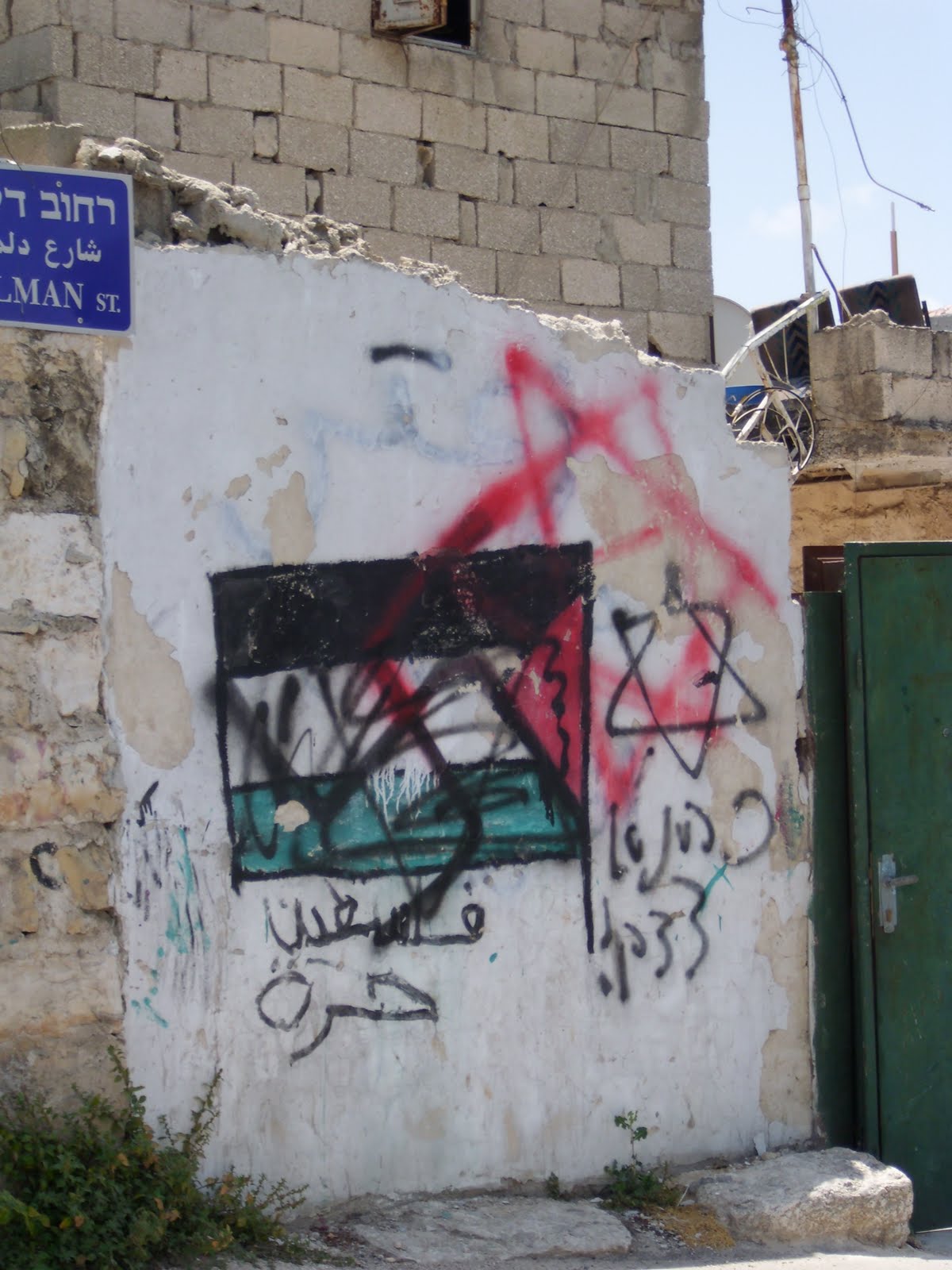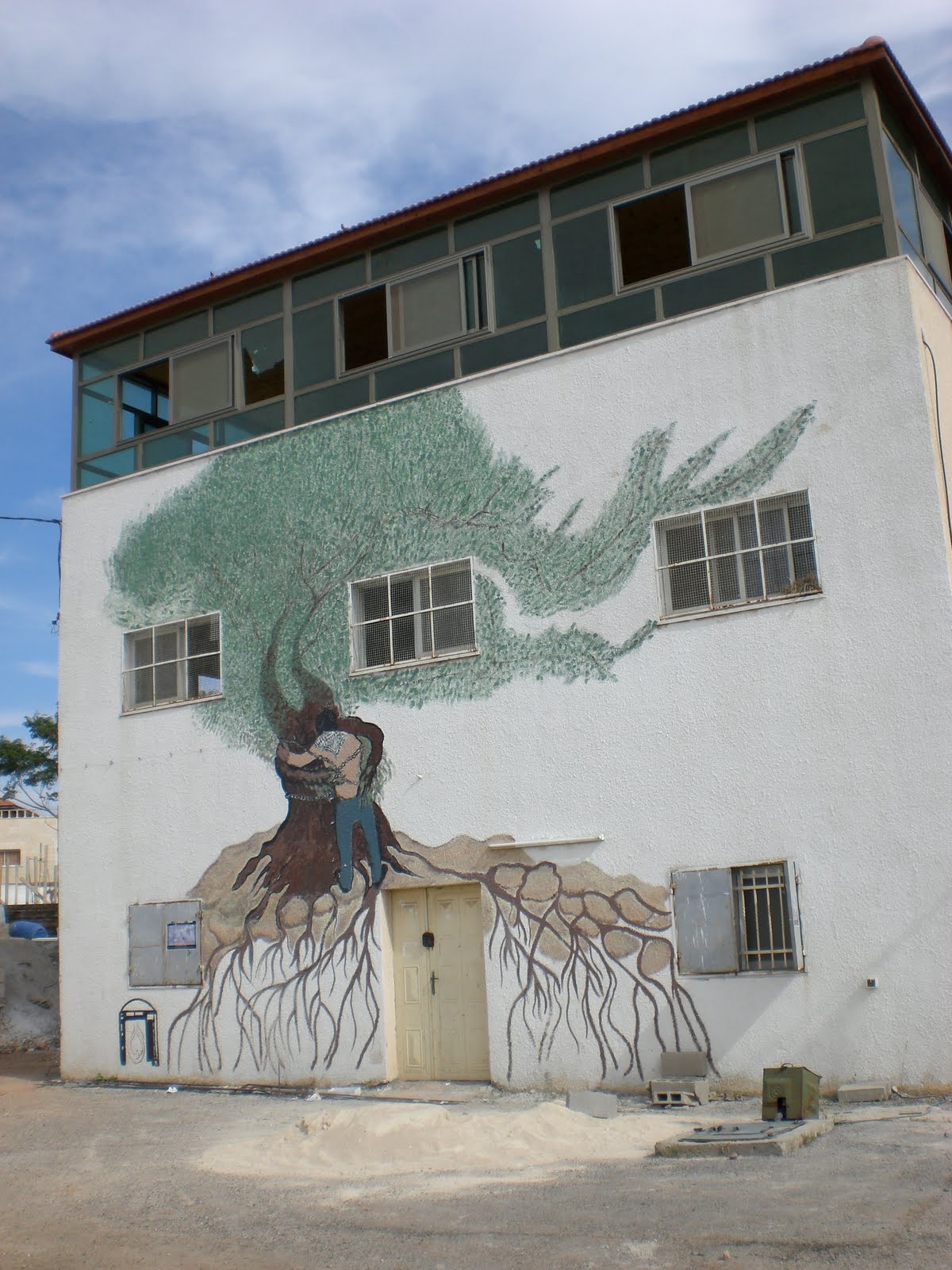
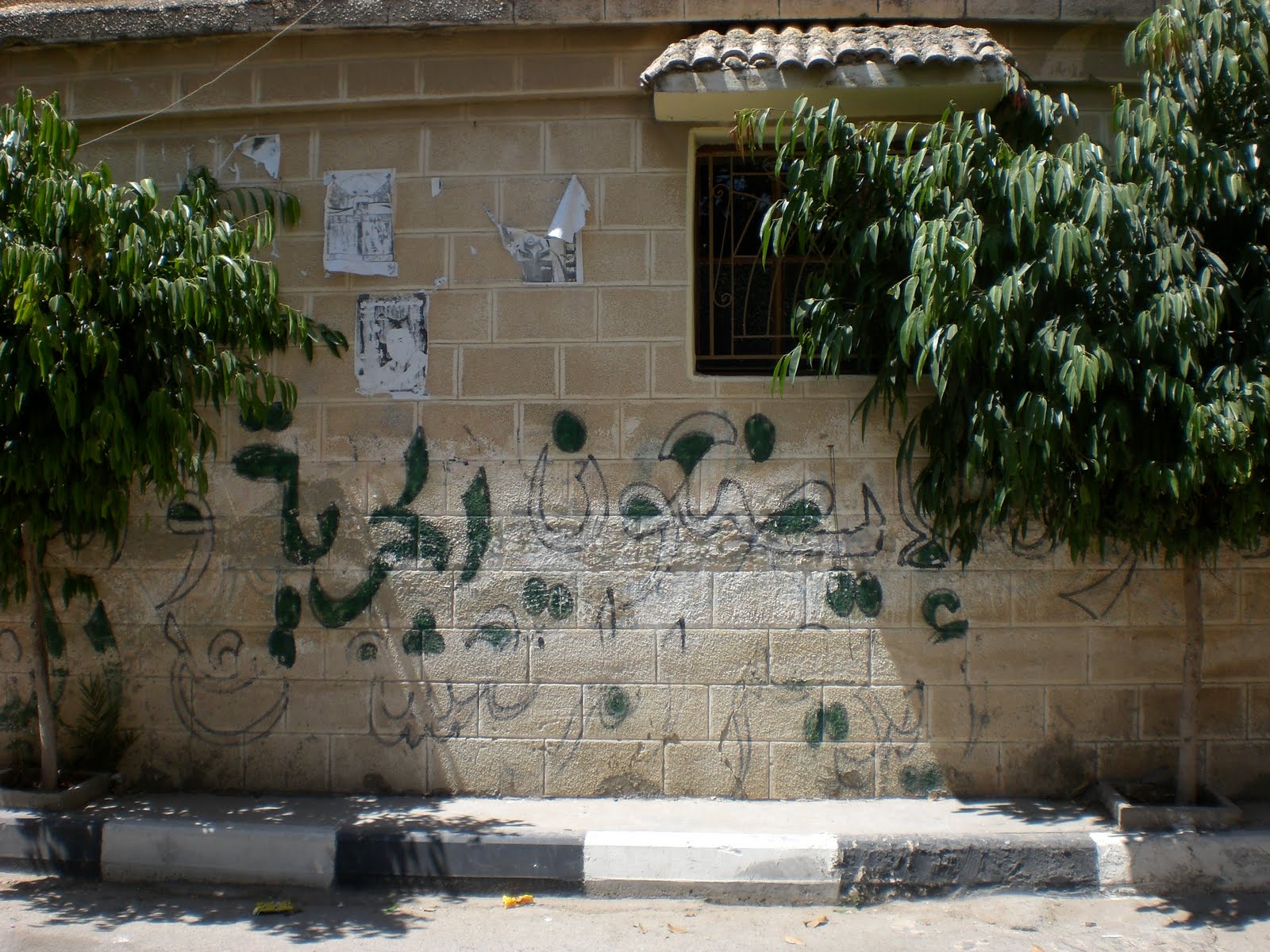
On May 24, a Monday morning, I took a service van from Nablus to Qualquilya. Upon arriving in Qualquilya I noticed a lot of local graffiti around town- this was the sort of graffiti that I had been researching back in the States. I can't read Arabic, but I supposed that a lot of the graffiti was advertising political factions. My suppositions were confirmed by locals, who were especially proud of Fatah's tags. "In Gaza? That is Hamas, but here in Qualquilya we are supporters of Fatah- you know Fatah? PLO?" I also saw PLFP and DFLP tags (in English letters). This was all very different from the graffiti I had seen on the security wall around Bethlehem, Qualandia, and Ramallah....




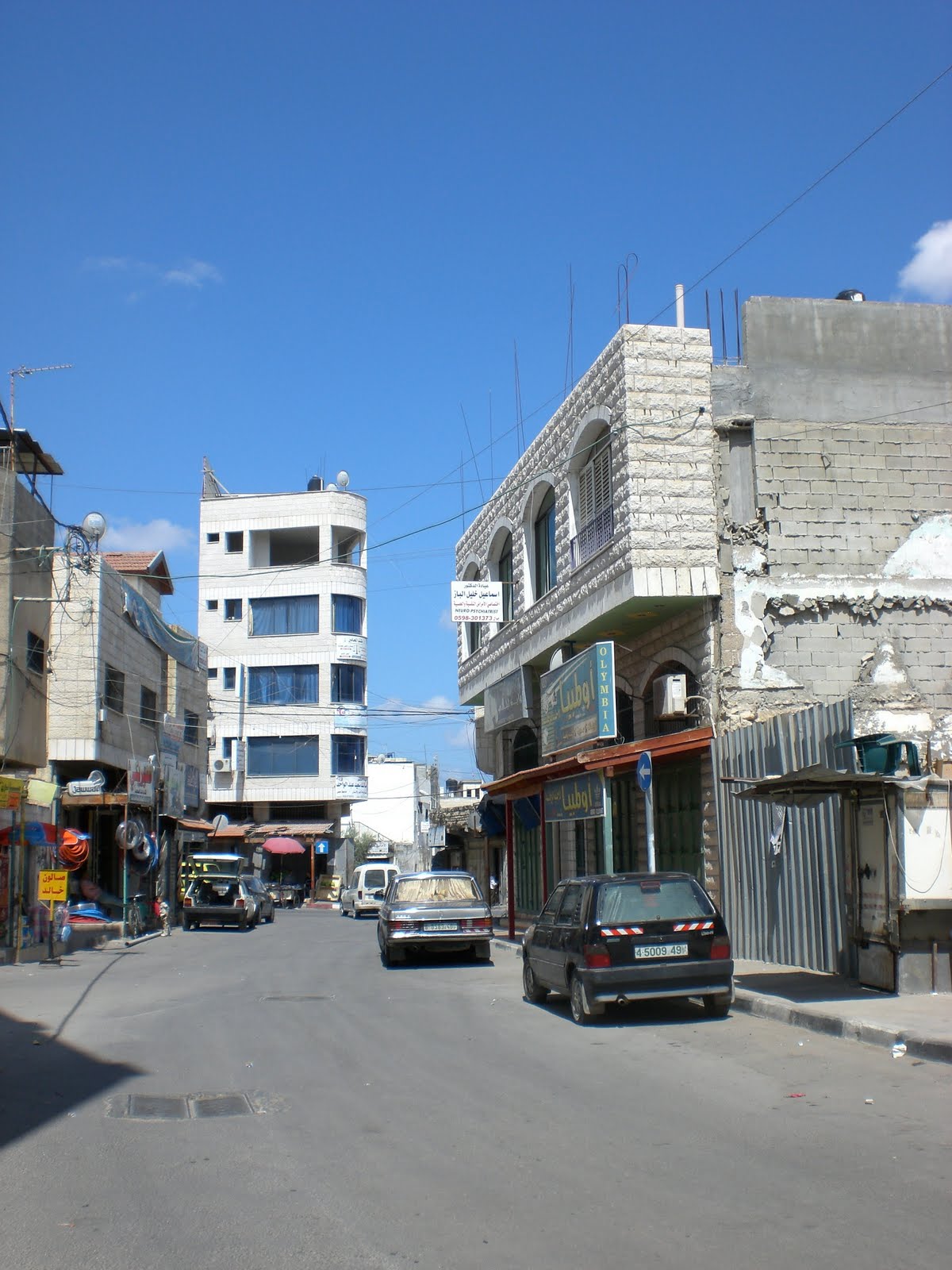
 ....After a few minutes of walking around and taking photos of the downtown area, I was stopped by a young man outside of a shop. He spoke some English, and was curious about what I was doing in Qualquilya. Was I an activist? Did I speak Arabic? Was I alone? Really?! It was the same line of questioning that I encountered everywhere that I went but, unlike most of the other places, there was no sign of other foreigners. The lack of graffiti in English should have tipped me off to the fact that I would encounter a serious language barrier in Qualquilya. The young man, who introduced himself as Ahmed, took me over to his friend's store so we could sit and chat. Within a few minutes Ahmed, his friend Abdullah, and I were smoking gnargeela (hookah) and trying our best to have a conversation. The tobacco was awesome, but the conversation was sort of frustrating. Ahmed was the only one of the two who spoke any English, and I'm not sure if he didn't understand my attempts to explain my research project, or if he was just disinterested. I'd gotten into the habit of pulling out my camera to help explain my purpose in the West Bank, "I'm studying graffiti. You know, like aerosol on the wall between Israel and Palestine? Look." Oftentimes when I showed people the pictures on my camera screen they would immediately understand and point me in the direction of some cool local graffiti. Ahmed's reaction was more along the lines of, "ohh... it's very beautiful, yes? Beautiful like you. Do people here say ahlan ya helwa to you? You know 'helwa'?" This interaction was uncomfortably reminiscent of my time in Cairo. Abdullah invited me to go to the back of the store to grab a soda, which I did, and was rewarded with an ever-so gentle ass-groping. This was exactly like Cairo, and I had to get out of it. Sometimes if takes a little abuse for me to realize how well I'm generally treated. Throughout my trip in the West Bank I was surprised by how little I was hassled- within my first week of arriving in Cairo I got felt up twice on the street, and had a bolt thrown at my ass (I still loved being in Cairo, though. I just had to get a little smarter about how I conducted myself, and a couple of Egyptian dudes had to get kicked in the shins). During this trip I met two Palestinian men who spent a lot of time with foreigners, and both told me that harassment against foreign women in Palestine was on the decline. It seems that as a culture, Palestinian men have been working to distance themselves from the 'grope-y Arab man' stereotype. Don't bite the hand that feeds you, I guess. Anyway, I was an am extremely appreciative that many men have adopted this attitude- maybe some Palestinian men can come to Portland and put drunk American cat-callers in their place some day...
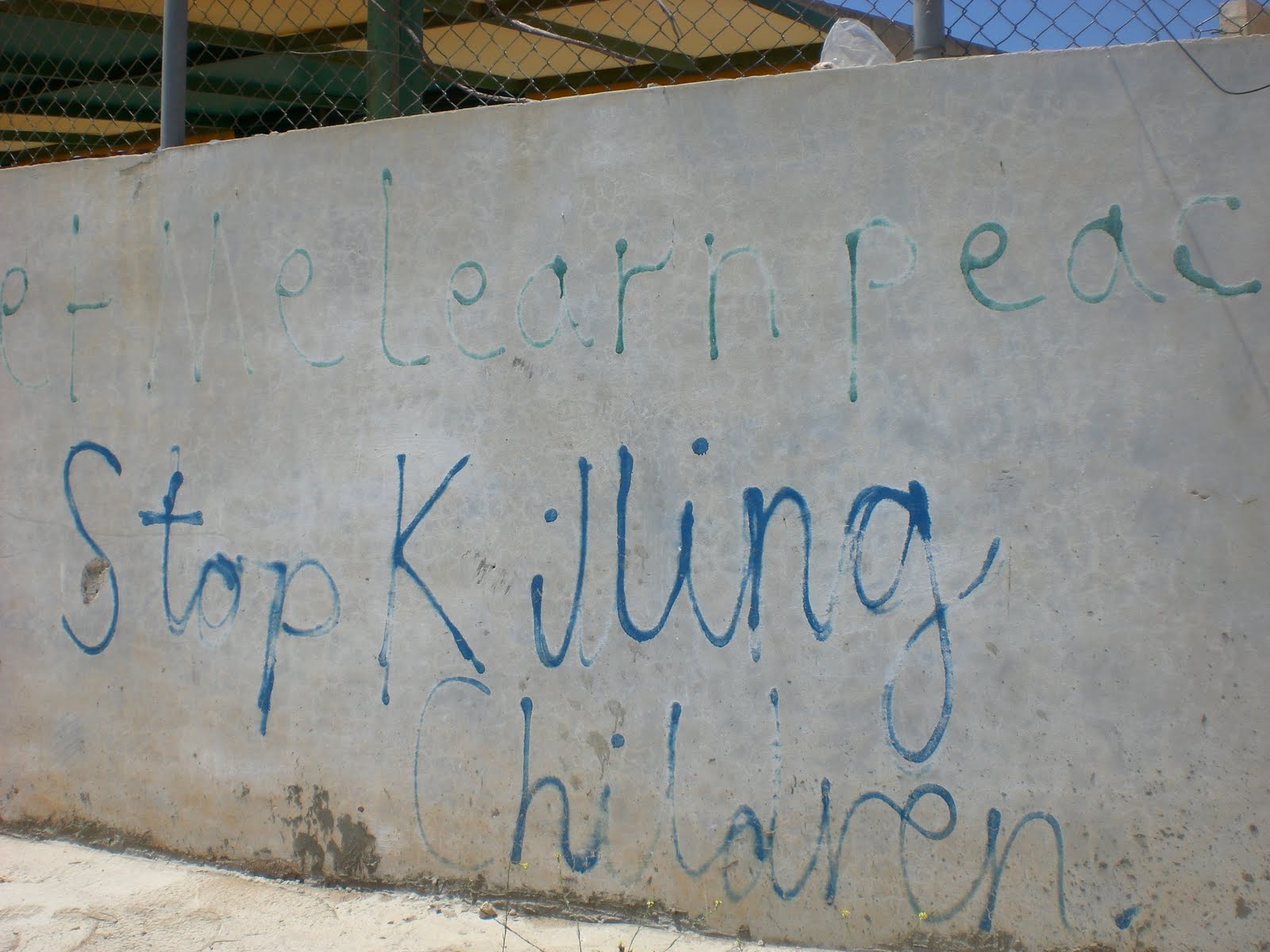 Wherever I went, people were invested in hooking me up with other English speakers. People would say, "No, my English is not so good, but wait, my cousin..." and then they would go get their cousin, or friend, or brother, and we would speak together. Someday, when my lazy ass finally learns Arabic, I'll be much less limited in the company that I keep. But for this trip, most of my prolonged social interactions were necessarily with teenaged guys, middle-aged men, people who work with tourists and, of course, other foreigners. My English-speaking friend in Qualquilya was a man named Suqar. He was probably in his mid-forties, and had learned English a few decades ago in India. This meant that his English was pretty immaculate, but he had a totally unexpected accent. I was really lucky that the two of us were introduced. On top of giving me coffee and candy, which are two of my favorite things, he gave me a tour of Qualquilya and the security wall/ fence in his air-conditioned car. Most of the Israel/ Palestine border in this area is a fence- but there is a stretch of concrete wall. This wall had the same sort of graffiti I was used to seeing: little drawings and ultimatums delivered in English....


I was glad that I got to see the fence as well, even though it is not a proper canvas for graffiti. Most of the "security" wall in the West Bank is made up of fencing, rather than concrete. Concrete walls are crazy because you can hear what is happening on the other side- when I was in al-Ram I was really tripped out by the sounds of cars and children's voices (in Arabic) that were perhaps only five, ten, or twenty feet from me. It is hard to wrap your mind around the fact that the anonymous sounds are from a different country. Without the visual impact of the wall, you would imagine that you were hearing noises from another block of the same neighborhood. The fence has a similar, but different, psychological impact on the observer. From a distance, the fence is camouflaged by the land. Palestinian olive trees blend imperceptibly with Israeli olive trees. Looking out onto the landscape I was aware that I was looking at two countries, but it was impossible to tell the Palestinian parts from the Israeli parts- when did one turn into the other? It is completely ridiculous.